
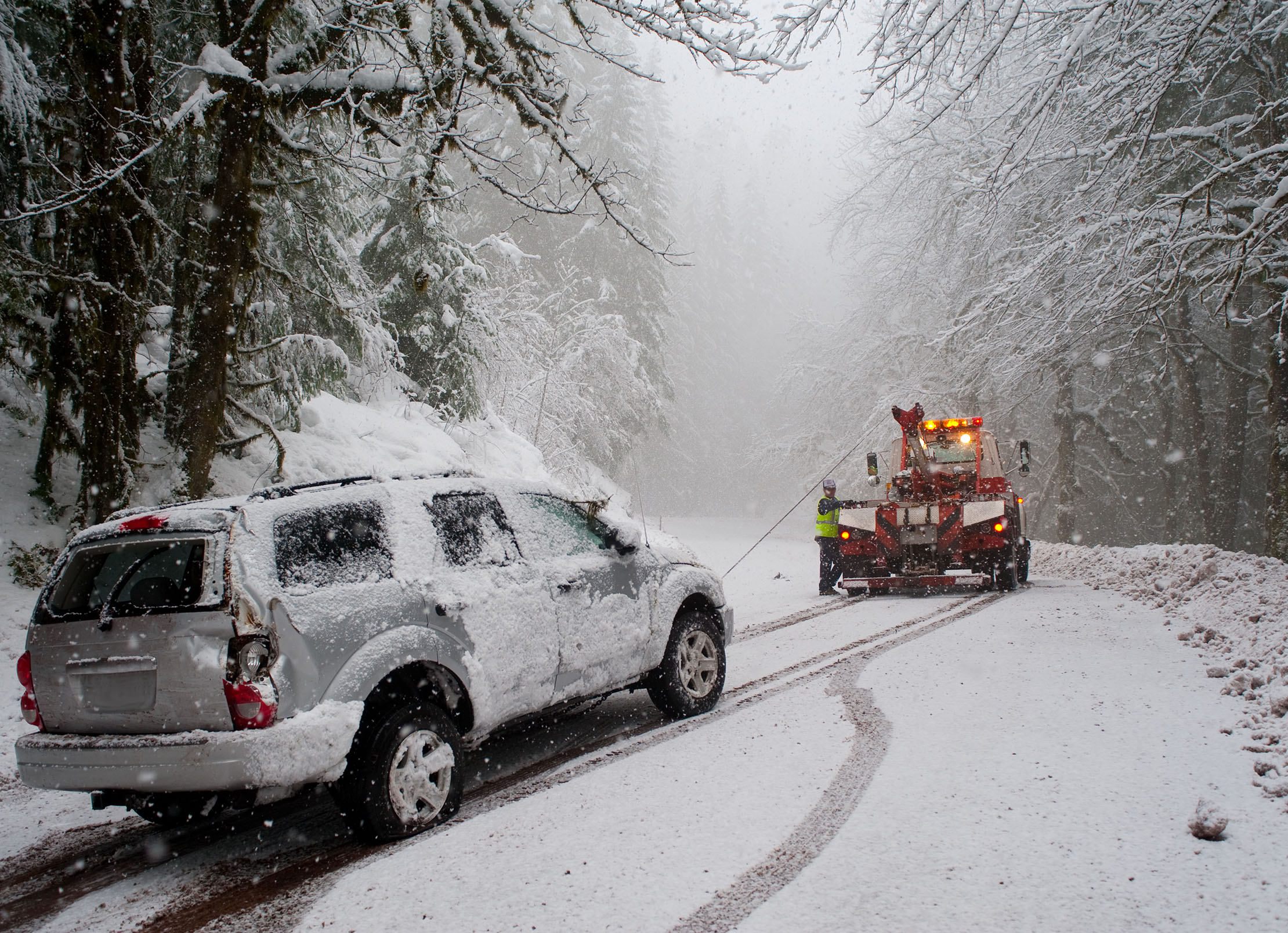
If you hit a deer near Ottawa, slow down, turn on your hazard lights, and move the vehicle off the road if it can be driven safely. Call 911 if anyone is hurt or you are in danger. If the car is leaking fluid, has a damaged wheel or will not start, call a tow rather than risk driving it. For deer collision towing in Ottawa, you can reach Gervais Towing at 613-747-4666, any hour of the day or night.
A deer strike happens fast and leaves most drivers shaken. This guide walks through what to do in the first minutes, how to judge whether your vehicle is safe to drive, and how a tow works when it is not.
Where and when deer collisions happen around Ottawa
Deer are not only a rural problem. Ottawa has plenty of green space, and deer move along the edges of highways, rail corridors, creeks and farmland. Stretches of Highway 417 and Highway 416 outside the core, roads around Kanata and Barrhaven, and the rural edges of Orleans and Gloucester can all see deer crossing.
Deer are most active at dawn and dusk, and the fall mating season, roughly October through December, tends to put more of them on the move. Short winter days mean your commute can fall into those low-light hours, so slow down and scan the shoulders on darker drives.
What to do in the first few minutes
Stay calm and work through these steps in order.
- Brake steadily and stop safely. Avoid swerving hard if a collision is unavoidable. Swerving into oncoming traffic or a ditch can cause a worse crash than the deer itself.
- Turn on your hazard lights. This warns other drivers, especially on a fast road like Highway 417 or Highway 174.
- Check yourselves first. If anyone is injured, or the vehicle is in a dangerous spot, call 911 right away.
- Move the car if you can. If it still drives normally, pull onto the shoulder or into a safe lot. If it will not move, stay buckled in with the hazards on until help arrives, unless it is safer to step out.
- Stay away from the animal. An injured deer can kick and thrash, and it can hurt you badly. Do not try to move it or approach it.
- Be careful outside the vehicle. If you must get out, stay well clear of traffic and keep your phone with you. Standing behind a guardrail is safer than standing beside the car.
Is your vehicle safe to drive?
Deer are heavy, and even a glancing hit can do hidden damage. Before you pull back onto the road, walk around the vehicle and look closely. If you are on a dark highway, use your phone light and keep your distance from traffic.
Signs that you should not drive and should call a tow:
- Fluid dripping under the engine, including coolant, oil or washer fluid mixed with something else.
- Steam or smoke coming from under the hood.
- A hood that will not close or sits bent into the windshield view.
- Broken or missing headlights, which leave you unable to see or be seen.
- A bent wheel, a flat or damaged tire, or a car that pulls to one side.
- Warning lights on the dash, strange noises, or a car that struggles to start.
- Bumper or body parts hanging loose or rubbing against a tire.
If you are not sure, treat it as unsafe. A tow costs far less than a breakdown on the 417 at night, or a damaged engine from driving on a cracked radiator. If you are unsure whether you need a tow or just roadside help, our post on emergency roadside assistance explains where that line sits.
Deer collision towing Ottawa drivers can count on
When you call 613-747-4666, tell the dispatcher your location as exactly as you can: the highway or road, the nearest exit or cross street, and which direction you were travelling. Mention what your vehicle looks like and whether it is blocking a lane. That helps us send the right truck and plan a safe approach.
Gervais Towing has been family run since 1934, and we are open 24 hours at 1485 Star Top Rd in Gloucester. Our emergency towing service covers Ottawa and Eastern Ontario, and our drivers are trained with WreckMaster in current towing and recovery methods. A damaged front end, a bent wheel or a car sitting nose down in a ditch all call for careful loading, and that is the kind of job those methods are for.
Under Ontario’s Towing and Storage Safety and Enforcement Act, tow operators must disclose their rates and get your consent before the tow, except when police direct it. You will get an itemized invoice, and operators must accept credit card payment. You are welcome to ask the driver or dispatcher for a quote before agreeing. For more detail, see our TSSEA maximum rate schedule. Those figures are maximums, not what we charge.
After the tow: reporting and insurance
Once you are safe, there are a few follow-up steps.
- Check reporting rules. Whether you need to report the collision, and where, depends on the damage and circumstances. Check Ottawa Police guidance, and call 911 if there are injuries or danger.
- Call your insurer soon. Ask how animal collisions are handled under your policy, and what they need from you. Coverage varies, so confirm your own details rather than assuming.
- Take photos. Photograph the damage, the road and the surroundings before the vehicle is moved, if it is safe to do so.
- Choose where the car goes. Tell the driver whether you want it taken to your home, a repair shop or a dealership. Ask about storage if it will sit for a few days.
- Keep your paperwork. Hold on to the itemized invoice and any report numbers for your claim.
If you want a broader checklist for any kind of crash, see our guide to what to do after a car accident in Ottawa.
How to lower your risk on the road
You cannot predict every crossing, but a few habits help.
- Slow down at dawn and dusk, especially on roads with trees or fields close to the shoulder.
- Watch for eyes reflecting in your headlights. Where there is one deer, there are often more.
- Use high beams when the road is clear of other traffic, and dim them for oncoming vehicles.
- Obey wildlife crossing signs. They are placed where animals regularly cross.
- Always wear your seatbelt. It is your best protection in any collision.
- If a deer appears, brake firmly in your lane and keep the wheel straight.
Frequently asked questions about deer collision towing in Ottawa
Do I need a tow after hitting a deer?
Not always, but often. If you see leaking fluid, steam, wheel damage, broken lights or warning lights, do not drive. When in doubt, a tow is the safer choice.
Should I call 911 after a deer collision?
Yes, if anyone is injured, the vehicle is in a dangerous spot, or the animal is creating a hazard on the road. For other situations, check Ottawa Police guidance on reporting.
Can I touch or move the deer?
No. An injured deer can be unpredictable and dangerous. Stay back, keep clear of traffic and let the proper authorities handle it.
Who pays for the tow?
That depends on your insurance and your situation, so ask your insurer. Before the tow, you can ask the driver or dispatcher for a quote and see the disclosure our team provides.
Hit a deer on the road near Ottawa? Gervais Towing is available 24 hours. Call 613-747-4666 or learn more about our emergency towing service.
