
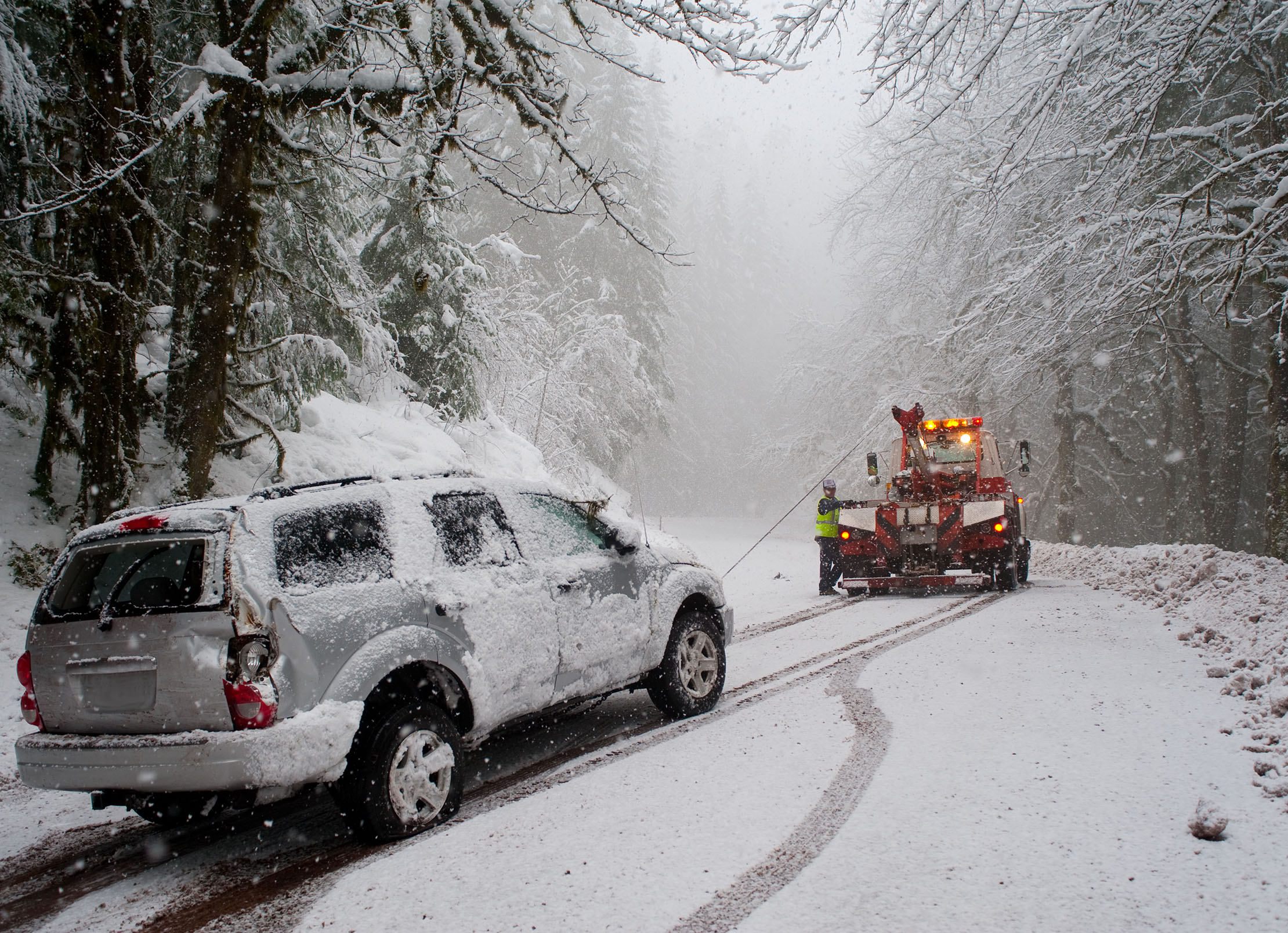
A good Ottawa winter car emergency kit includes warm clothing and a blanket, a flashlight, a phone charger or power bank, a small shovel, traction aids such as sand or cat litter, jumper cables, an ice scraper and brush, water and non-perishable snacks. With a kit like this in your trunk, a breakdown on a cold night is uncomfortable rather than dangerous. If you do need help, winter roadside assistance in Ottawa is a phone call away at Gervais Towing: 613-747-4666, open 24 hours.
Ottawa winters are long, cold and snowy. A wind off the Ottawa River, a squall on Highway 417 or drifting snow near Kanata and Orleans can turn a short trip into a long wait. Here is what we suggest keeping in your vehicle, and why.
Keep yourself warm
Your biggest risk while waiting for help is the cold. If your engine will not run or you cannot idle safely, the cabin loses heat quickly.
- A thick wool or fleece blanket, or a sleeping bag
- A spare winter coat, hat, scarf and warm gloves or mittens
- Extra socks and winter boots, especially if you usually drive in shoes
- Hand and foot warmers, which are light and cheap
Store these in a bag that will not get soaked. Keep them in the cabin if you have room, or in the trunk where you can reach them easily.
Stay visible and connected
Short winter days and falling snow reduce visibility. The goal is to be seen and to be able to call for help.
- A flashlight with fresh batteries, or a headlamp that leaves your hands free
- Reflective triangles or flares, to use only if you can place them without stepping into traffic
- A fully charged power bank and a charging cable that fits your phone
- A printed note with important numbers, in case your phone dies
Cold drains phone batteries fast, so keep your phone warm in an inside pocket until you need it. If you are on the road, hazard lights should stay on.
Get unstuck: traction and clearing tools
Many winter calls are not mechanical failures at all. They are vehicles stuck in a snowbank, a driveway or a parking lot.
- A compact folding shovel
- A bag of sand, salt or non-clumping cat litter for traction under the tires
- An ice scraper and snow brush, so you can clear every window, the roof and the lights
- Traction mats if you often park on unplowed streets
Clear snow from the exhaust pipe before you let the engine run, and never leave it idling in a closed garage. If you have been stuck for a while and nothing is working, call for help rather than spinning the wheels, which can dig you in deeper.
Prepare for a dead battery
Cold weather is hard on batteries. A car that started fine yesterday may not turn over on a minus 25 morning.
- Jumper cables (heavy gauge) or a portable jump starter
- A basic tool kit including pliers and a screwdriver
- A tire pressure gauge, since cold air lowers tire pressure
- A spare tire in good shape, plus the jack and wrench, and know how to use them
Test your battery and tires before the first big freeze. If you rely on a vehicle for work or for school runs in Barrhaven, Gloucester or Orleans, a quick check in October or November can save you a hard morning.
Food, water and comfort items
You may wait longer than you plan to, especially during storms. Pack:
- Bottled water (leave room for it to freeze, or keep it in the cabin)
- Energy bars, nuts or other snacks that do not spoil
- Any medication you need regularly
- Items for children or pets, such as extra clothing, a toy or a bowl
- Windshield washer fluid rated for winter temperatures
It is also smart to keep at least half a tank of fuel in winter. A fuller tank reduces condensation, and it lets you run the engine for heat if you are stranded and it is safe to do so.
When to call for roadside assistance
A kit helps, but some situations call for a professional. Call us if your vehicle will not start and a jump does not work, if you are stuck and cannot get out, if you have a flat and cannot change it safely, or if you are in a spot where working on the car is unsafe, such as a narrow highway shoulder. Gervais Towing offers emergency roadside assistance in Ottawa and Eastern Ontario, and our drivers are trained with WreckMaster in current towing and recovery methods. If the vehicle needs to be moved, we can arrange a tow as well.
When you call, tell us where you are, what vehicle you drive and what is going on. Ask the driver or dispatcher for a quote before work starts. We also publish our maximum rate schedule under Ontario’s towing rules on our site.
If anyone is injured or you feel in danger, call 911 first.
Frequently asked questions
What is the most important item in a winter car kit?
Warm clothing and a blanket, because cold is the biggest risk while you wait. A charged phone or power bank is a close second.
Should I keep a shovel in my trunk in Ottawa?
Yes. A small folding shovel helps you clear snow around the tires and exhaust, and it often solves a stuck-vehicle problem before you need to call anyone.
How full should my gas tank be in winter?
Many drivers aim to keep at least half a tank. This helps if you need to idle for heat while stranded, and it lowers the chance of moisture building up in the tank.
Does Gervais Towing offer roadside help at night?
Yes. We are open 24 hours, so you can call 613-747-4666 at any time.
Stuck, stranded or just not sure what to do? Call Gervais Towing at 613-747-4666. We are available 24 hours, and you can read more about our emergency roadside assistance or contact us online.
