
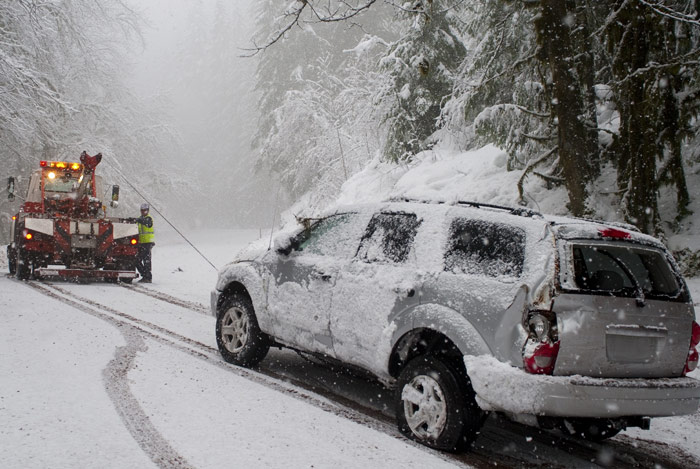
A police tow in Ottawa happens when an officer directs a tow truck to remove your vehicle, usually after a collision, a roadside emergency or a safety concern. In that situation the usual step of choosing a tow company and giving consent first does not apply, but your other rights as a customer still do. Here is what to expect and what to ask.
We are Gervais Towing, a family run company on Star Top Road in Gloucester since 1934, and we hold contracts with the Ottawa Police and the City of Ottawa. This guide explains the process in plain terms, so a stressful day is a little easier to follow.
What is a police-directed tow?
Most of the time, you decide who tows your vehicle. You call a company, get a quote and agree to the work. A police-directed tow is different. An officer on scene decides the vehicle needs to be moved and arranges for a tow operator to do it.
Common reasons include:
- A collision that leaves a vehicle blocking a lane on Highway 417, Highway 174 or the Airport Parkway.
- A vehicle that cannot safely be driven after a crash.
- A vehicle that is a hazard where it has stopped.
- Other situations where police need the vehicle removed from the scene.
The officer is focused on safety and on clearing the road. That is why they may call the tow operator themselves instead of asking you to pick one.
Do you have to consent to a police tow in Ottawa?
Under Ontario’s Towing and Storage Safety and Enforcement Act (TSSEA), which took effect on January 1, 2024, a tow operator normally needs your consent before towing your vehicle. The main exception is when police direct the tow. In that case the operator can proceed without your consent.
That does not mean you have no say in anything. You can still ask the driver questions, and you can still expect clear information about the job. Stay calm and polite with both the officer and the driver. They are working to get the scene cleared safely.
What you can still ask the driver
Even when police direct the tow, these questions are reasonable to ask:
- What is the name of the towing company, and can I see the operator’s certificate?
- Where is my vehicle being taken?
- What are the rates that apply to this tow?
- How and when can I get my vehicle and my belongings back?
Under the TSSEA, tow operators need an MTO certificate and must disclose their rates. Operators must also provide an itemized invoice and accept credit card payment. If something is unclear, ask for it to be explained before you sign anything.
Rates are also public. Gervais publishes its TSSEA maximum rate schedule and tow operator certificate on our rate schedule page. For example, the maximum for a basic tow of a vehicle up to 4,536 kg GVWR is $750. That figure is a maximum set under the schedule, not what we charge for every job. Ask the driver or dispatcher for a quote.
What to do at the scene
The first priority is safety. If anyone is hurt or the situation is dangerous, call 911 first. If you can do so safely, move to a spot away from traffic and let the officer lead.
Before your vehicle leaves, try to do the following:
- Take your wallet, phone, licence, registration and insurance slip.
- Remove personal items, child seats and anything valuable.
- Take photos of the vehicle and the scene, if it is safe.
- Note the name of the officer and the tow operator.
- Ask where the vehicle is going and get that in writing if you can.
Drivers on Highway 417 or Highway 416 should also remember Ontario’s “slow down, move over” rule. It applies to tow trucks with flashing amber lights, so give the operator room to work. Staying well back from the lane keeps everyone safer, including you.
Collisions, reporting and your insurer
Many Ottawa collisions with only property damage and no injuries are reported at a Collision Reporting Centre rather than at the roadside. Because requirements can change, check Ottawa Police guidance for the current process. An officer at the scene can also tell you what applies to your situation.
Call your insurer as soon as you can. Ask about towing and storage coverage, and tell them where your vehicle was taken. Keep your itemized invoice and any paperwork you receive. Your insurer may ask to see them.
Getting your vehicle back
After a police tow, the next step is getting your vehicle from the lot or the repair shop. Contact the tow operator listed on your paperwork and ask what you need to bring. That typically means identification and proof of ownership or insurance, but ask so you only make one trip.
Ask about storage too. Find out where the vehicle is and what the storage rates are, since storage rates also appear on a published rate schedule. Moving quickly keeps costs down, so do not leave it sitting while you sort out the insurance paperwork.
If your vehicle needs to go to a body shop or dealership instead, let the operator and your insurer know. Our emergency towing service can move vehicles around Ottawa and Eastern Ontario, from Orleans and Gloucester to Kanata and Barrhaven.
Frequently asked questions about police tows in Ottawa
Can I choose my own tow company after a collision?
Often, yes, if police are not directing the tow. If an officer has directed the tow, the operator is arranged for you. Ask the officer what your options are.
Do I still get an itemized invoice with a police-directed tow?
Yes. Under the TSSEA, operators must provide an itemized invoice and accept credit card payment. Ask for your copy before you leave or when you collect your vehicle.
Who pays for a police-directed tow?
In most cases the vehicle owner or driver pays the towing and storage charges, and some of that may be covered by insurance. Check your policy and call your insurer early.
What if I think the charges are wrong?
Ask the operator to explain each line of the itemized invoice, and compare it with their published rate schedule. If you still have concerns, keep your paperwork and talk to your insurer.
If you need a tow in Ottawa or Eastern Ontario, we are available 24 hours. Call us at 613-747-4666, contact us online or learn more about our emergency towing service.
