
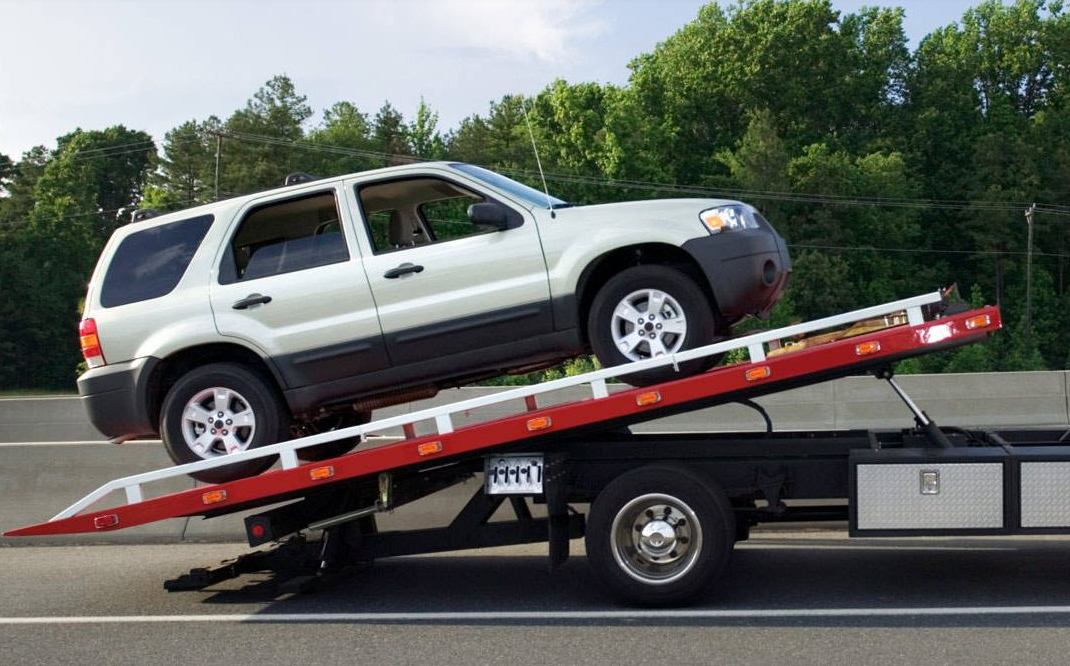
Under the move over law in Ontario, drivers must slow down and move over when they pass a stopped tow truck that has its flashing amber lights on. If you can do it safely, change lanes to leave an empty lane between you and the truck. If you can’t, slow down and pass with extra care. It is the same rule that protects police, fire and ambulance crews, and it applies on every road from Highway 417 to a quiet street in Orleans.
We have been towing in Ottawa since 1934, and three generations of our family have worked on the side of the road. Here is what the rule means in practice, and why it matters to the people doing this job.
What the move over law in Ontario requires
Ontario’s Highway Traffic Act has a “slow down, move over” rule. It covers police cruisers, fire trucks and ambulances. It also covers tow trucks that are stopped with their flashing amber lights on. When you approach one, the law asks you to do two things:
- Slow down as you approach and pass.
- Move over into another lane if it is safe, so there is a lane of space between you and the vehicle.
If you can’t change lanes because of traffic, a barrier or a single lane, slow right down and pass with caution. Breaking the rule can bring fines and demerit points. The more important reason to follow it is that the people on the shoulder are right there, a short step from moving traffic.
Why tow operators are so exposed
A tow truck on the side of Highway 417 or Highway 416 is working just a few feet from vehicles moving at highway speed. The driver has to hook up, secure the load and check the vehicle, and often does this with their back partly to traffic. Add rain, snow, darkness or glare, and the margin for error shrinks.
Many drivers assume the danger is only for the person whose car broke down. In fact, the operator is often there longer than anyone, because they stay until the job is finished and the scene is clear. Giving them room is a simple way to get everyone home safely.
How to move over safely on Ottawa roads
Our roads each have their own quirks, so a little planning helps. Here is how to handle it:
- Look ahead. Flashing amber lights are visible well before you reach the truck. Start easing off the gas early rather than braking hard at the last second.
- Check your mirrors and blind spot. Signal and change lanes only when there is a clear gap.
- Don’t swerve. A sudden lane change can cause a collision of its own. A smooth, early move is safer than a late one.
- Slow down even after you move over. A lane of space helps, but speed still matters.
- Stay alert to people on foot. Drivers, passengers and operators may be outside the vehicles.
On busy stretches like Highway 417 through the downtown core, Highway 174 into Orleans, or the Airport Parkway at rush hour, you may not be able to change lanes right away. In that case, slow down and leave as much space as you can. On roads with a single lane in each direction, the rule still applies: slow down and pass carefully.
What if you are the one who needs a tow?
If your vehicle breaks down or you are in a collision, the same safety thinking applies to you. Call 911 first if anyone is hurt or if you are in immediate danger. Otherwise, move to the shoulder if you can do so safely, turn on your hazard lights and stay somewhere safe, such as behind a barrier or well off the road, while you wait.
When the tow truck arrives, expect to see flashing amber lights. Follow the operator’s directions about where to stand. They do this every day, and they know where the risks are on a given stretch of road. If you want a refresher on what to do while you wait, ask the driver or dispatcher when you call.
Ontario’s Towing and Storage Safety and Enforcement Act also gives you protections as a customer, including rate disclosure and an itemized invoice. We publish our maximum rate schedule and tow operator certificate on our site, and you can ask the driver or dispatcher for a quote.
How we work on the road
Our drivers are trained with WreckMaster in current towing and recovery methods. That training covers the technical side of a tow, and it also covers working carefully around traffic. A calm, planned approach to a roadside job protects the operator, the customer and everyone driving past.
We handle everything from light duty towing to heavy recovery across Ottawa and Eastern Ontario, and we are open 24 hours. Whether the call comes at midday on the Queensway or at 3 a.m. near Kanata or Barrhaven, the same rule applies to the people who drive by: slow down and move over. If you have questions about a tow or a roadside situation, you can reach us through our contact page or by phone.
Frequently asked questions about Ontario’s move over law
Does the move over law apply to tow trucks in Ontario?
Yes. Ontario’s Highway Traffic Act covers tow trucks that are stopped with their flashing amber lights on, along with police, fire and ambulance vehicles. Drivers must slow down and move over if it is safe to do so.
What if I can’t change lanes?
If traffic, a barrier or a single lane stops you from moving over, slow down and pass with extra caution. Take it slowly enough that you can react if someone steps out or the truck pulls back into traffic.
Do I need to slow down on a highway like the 417 too?
Yes. The rule applies on all roads, including highways such as the 417, 416 and 174. Speeds are higher there, so slowing down early matters even more.
Who do I call if I see a stranded vehicle in danger?
Call 911 if someone is hurt or if there is immediate danger on the road. For a tow, you can call us at any hour.
We are available 24 hours a day. Call us at 613-747-4666 or learn more about our emergency towing in Ottawa, and please slow down and move over when you see our lights.
