
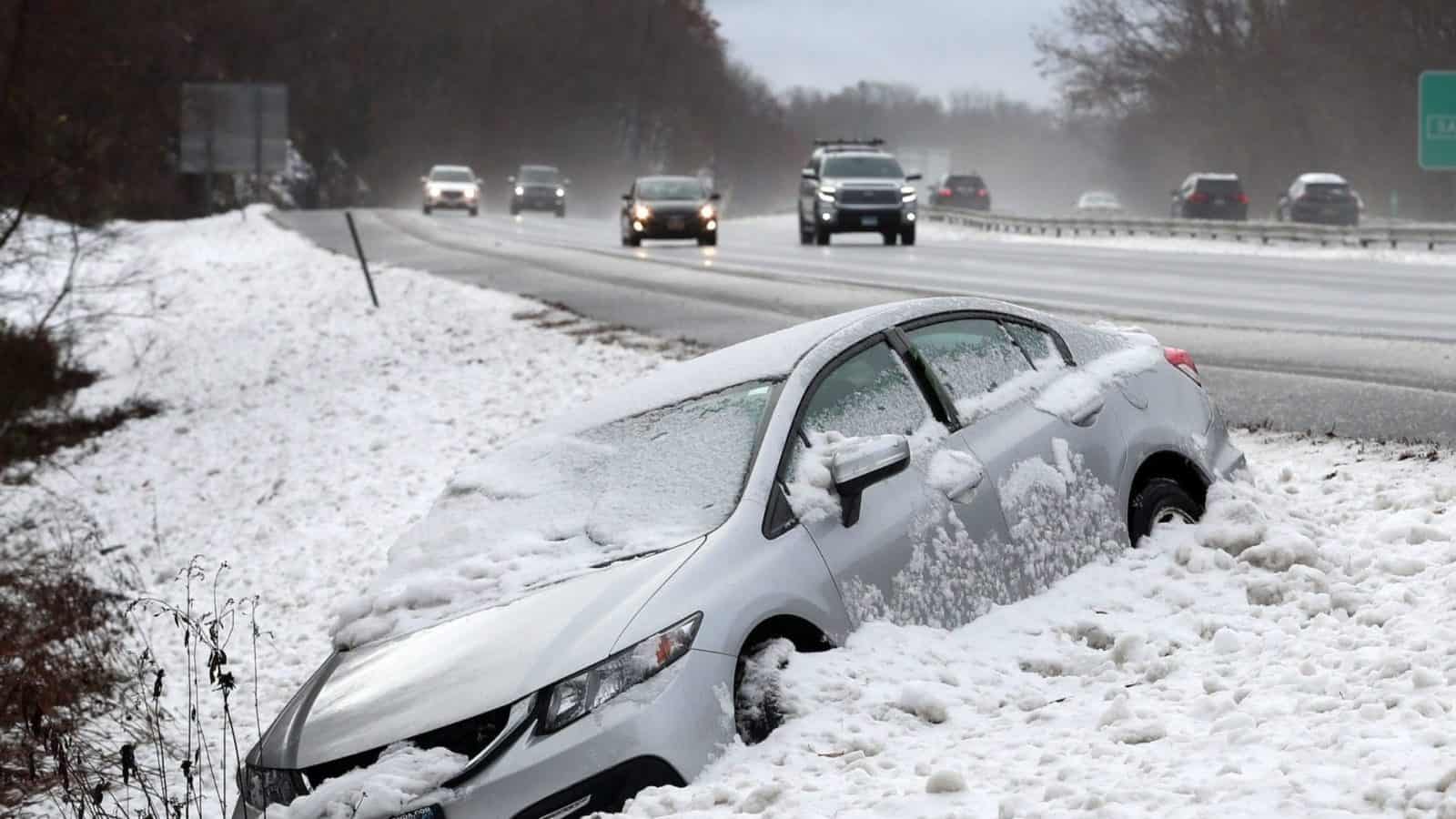
If you break down on Highway 417 or Highway 416 in winter, get your vehicle as far onto the right shoulder as you safely can, turn on your hazard lights, and call for help. If you are in danger or anyone is hurt, call 911 first. For a tow in Ottawa and Eastern Ontario, call Gervais Towing at 613-747-4666, because we are open 24 hours and offer emergency towing around the clock.
Waiting on a highway shoulder in an Ottawa January is stressful. Traffic is fast, snow cuts visibility and the cold sets in quickly. What you do in the first few minutes matters, so here is a calm, practical plan.
Get to safety first
As soon as you notice a problem, such as a warning light, a loss of power or a flat tire, take your foot off the gas gently and signal. Do not brake hard on snow or ice. Coast toward the right shoulder while you still can.
- Turn on your hazard lights right away and leave them on.
- Steer as far right as possible, with your wheels turned away from the road if you are stopped on a shoulder.
- If you can reach an exit, a ramp or a well-lit area, that is usually safer than stopping on a narrow shoulder.
- Do not try to push or restart a vehicle in live traffic.
On busy routes like Highway 417 through the downtown core, Highway 416 near Barrhaven, or Highway 174 through Orleans, shoulders can be tight. Your priority is distance from moving vehicles, not saving your parking spot.
Decide: stay inside or get out
This depends on where you are stopped. If you are on a highway shoulder with fast traffic beside you, many drivers choose to stay in the vehicle with their seatbelt on and hazard lights flashing. A vehicle on the shoulder can be struck by another driver who loses control on snow, and that risk is real.
If you do need to leave the vehicle, for example if there is smoke or the car is in an unsafe position, exit on the side away from traffic. Move well clear of the road, behind a guardrail if there is one. Keep children and pets with you and dress for the cold.
If you feel unsafe at any point, call 911 and tell them where you are.
Call for emergency towing and share your location
When you phone us at 613-747-4666, the dispatcher will ask a few simple questions. Having these ready helps:
- Your exact location: the highway, direction of travel, the nearest exit or cross street, and any landmark such as an overpass or sign.
- Your vehicle: make, model, colour and whether it is a car, SUV, van or truck.
- What happened: no start, flat tire, collision, stuck in snow or something else.
- Whether anyone is hurt and how many people are with you.
- Whether the vehicle is all-wheel drive, electric or lowered, since that can affect how it is moved.
Your phone can often show your position. Open your map app and read out the highway name and nearest exit. If you are not sure which direction you were travelling, check the last exit sign you passed.
Please also ask the driver or dispatcher for a quote before the tow begins. Under Ontario’s Towing and Storage Safety and Enforcement Act, you have the right to know the rates and to give consent, and we explain more about this in our TSSEA maximum rate schedule page.
Stay warm and visible while you wait
Winter waiting time is where small preparations help most. You may be there longer than you expect, particularly during storms when many drivers need help at once.
- Keep your hazard lights on. If it is dark, turn on the interior dome light so you are easier to see.
- Run the engine only briefly for heat if the vehicle will start, and make sure the exhaust pipe is not blocked by snow. A blocked tailpipe can allow carbon monoxide into the cabin.
- Use blankets, a winter coat, a hat and gloves. Keep your feet off the cold floor if you can.
- Keep your phone charged. A power bank or car charger is worth having.
- Stay in contact with dispatch so we know if your situation changes.
If you have a reflective triangle or flares, set them out only if you can do so without stepping into traffic. If there is any doubt, stay put.
When the tow truck arrives
Ontario’s Highway Traffic Act includes a “slow down, move over” rule that covers tow trucks with flashing amber lights. Drivers must slow down and, where possible, move over a lane. Our operators work beside live traffic, so please stay clear of the road and follow the driver’s directions when they arrive.
Our drivers are trained with WreckMaster in current towing and recovery methods. They will confirm the destination with you, explain the plan and talk you through what happens next. Before you leave, check that you have your keys, phone, wallet and anything else you need from the vehicle, and ask for an itemized invoice.
Where the vehicle goes next is your choice, within reason. Many people ask for a tow to a trusted repair shop, a dealership or home. Tell the dispatcher your preference when you call.
Frequently asked questions
Should I stay in my car on Highway 417 if it breaks down?
If you are on a busy shoulder with fast traffic, many drivers stay inside with the seatbelt on and hazard lights flashing. If the vehicle is smoking, on fire or in an unsafe spot, get out on the side away from traffic and move well clear. Call 911 if you are in danger.
Who should I call first, 911 or a tow company?
Call 911 if there are injuries or immediate danger. For a breakdown with no injuries, call a towing company directly. If you are unsure, 911 can help you decide.
Does Gervais Towing take emergency calls at night?
Yes. We are open 24 hours, and you can reach us at 613-747-4666 at any hour.
Can I choose where my vehicle is towed?
Generally yes. Tell the driver or dispatcher where you want it taken. Tows directed by police at a collision scene can be different, since police may direct the tow.
If you are stuck on the road this winter, call Gervais Towing at 613-747-4666. We are available 24 hours a day, and you can learn more about our emergency towing in Ottawa or contact us online.
